Rummy Tips: Use a Reverse Sort to Find Hidden Singles
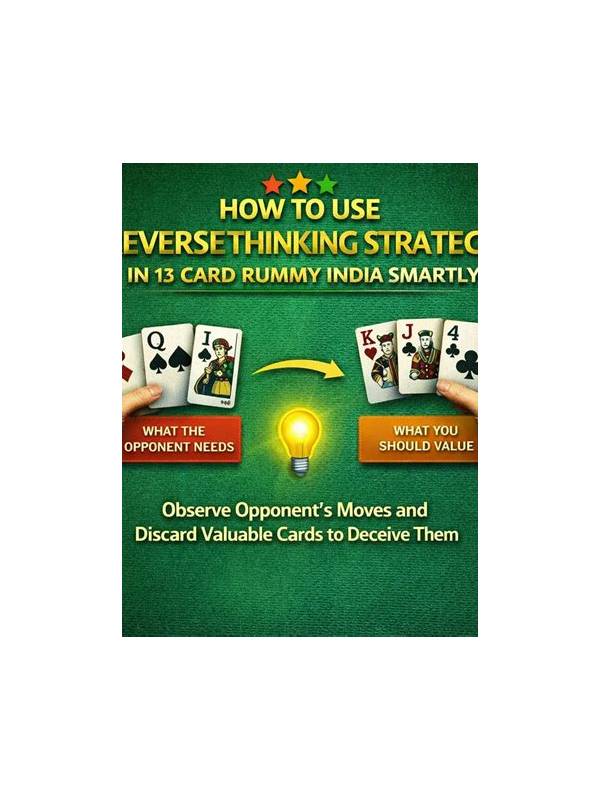
Most players sort a hand by building groups first. That is useful, but a reverse sort can reveal a different problem: cards that look supported only because they sit beside a tempting pattern. Starting with the weakest cards gives your review a useful second perspective.
Begin with the unmatched cards
After a normal sort, identify every card that belongs to no confirmed group. For each one, list its nearest realistic connections. A card with no credible neighbor is a true singleton. A card with one narrow connection is a conditional singleton and may deserve the same attention.
Do not judge only by rank. A high card may be safely connected, while a low card may be costly to keep if it occupies a slot and has no route. The reverse sort is about fit, not a simple high-to-low discard rule.
Test the hidden support
Remove one suspected singleton from the mental layout and inspect what changes. If nothing important changes, the card may be a clean discard candidate. If removing it breaks two routes at once, it is doing hidden work and needs closer analysis.
Then temporarily remove the most attractive group. This prevents a visually strong sequence from hiding the fact that the rest of the hand has no plan. Ask whether the remaining cards can form a coherent backup or whether the arrangement depends entirely on one group.
Use reverse sorting before key choices
Run this check after a major draw, when several cards are moving between groups, or before a declaration. It should be brief. Name the two most isolated cards, compare their point exposure and replacement cost, and choose one next objective.
Reverse sorting is not a permanent way to arrange cards. It is a diagnostic pass. Used alongside ordinary grouping, it helps you notice hidden singles, weak dependencies, and cards that are being kept because they look comfortable rather than because they have a credible job.
Try alternating the direction on practice hands. Sort normally on one hand and reverse-sort the next. Compare which approach finds the first meaningful discard candidate sooner. The exercise is not a contest between methods; it teaches you to change viewpoint when a familiar arrangement stops explaining the hand clearly.
The reverse pass is especially helpful after drawing a card that seems exciting. Excitement can make every nearby card appear important. Starting with the least supported cards restores balance and asks whether the new card truly improved the hand or merely made one pattern easier to imagine.