Rummy Hand Compression: Simplify Before You Choose
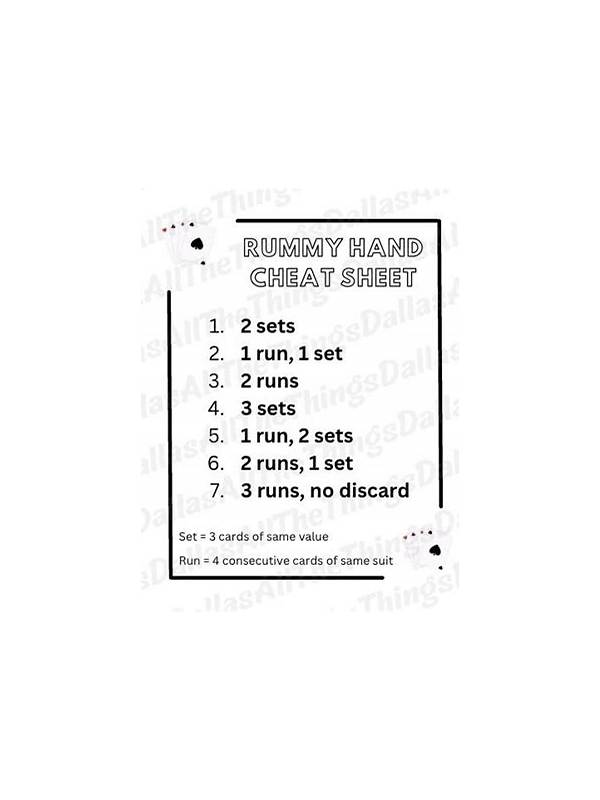
Hand compression means reducing a complicated set of cards to a few meaningful facts. You are not ignoring information; you are organizing it so that a decision can be made. Begin by identifying the strongest confirmed group and the two most plausible unfinished groups.
For each unfinished group, write or imagine three details: the cards already supporting it, the number of likely additions, and what happens if it fails. This prevents one attractive possibility from dominating the review. A route with many possible additions but a costly failure may be less useful than a narrower route with a safe fallback.
Then compress the loose cards into roles. Mark them as high-risk, flexible, or currently irrelevant. High-risk cards carry points or have few connections. Flexible cards can fit more than one arrangement. Currently irrelevant cards may become useful later but do not yet justify blocking a clearer plan.
Compare only two or three candidate actions. For each one, ask what it improves, what it gives up, and whether the next turn remains manageable. Generating ten hypothetical layouts can feel thorough while making the final choice slower and less accurate.
Re-expand the hand after the draw. The new card may turn a flexible connection into a confirmed group or make a previous plan obsolete. Compression is a momentary view, not a rule that the hand must follow. Update it whenever new evidence appears.
This technique is especially useful on a small screen, where visual sorting can be tiring. Arrange cards by role, check the visible discard, and make one deliberate selection. A clear summary gives you enough information to act without pretending that an uncertain hand can be solved perfectly.
Compression is also helpful after an interruption. Rebuild the summary instead of relying on memory: confirmed groups, active connections, loose risks, and the next legal action. This takes less effort than reconstructing every thought from before the interruption, and it lowers the chance of acting on an outdated plan. You can write the compressed summary in a note during offline practice, then delete it before a live session if notes are not allowed. Keep the method within the table’s rules. The value comes from clearer thinking, not from gaining outside assistance or storing information that the format prohibits. A short summary turns clutter into a manageable decision without pretending that uncertainty has disappeared. Recheck the summary whenever a new card appears, because compression is useful only while it reflects the current hand.