How to Use Card Notation in a Rummy Study Journal
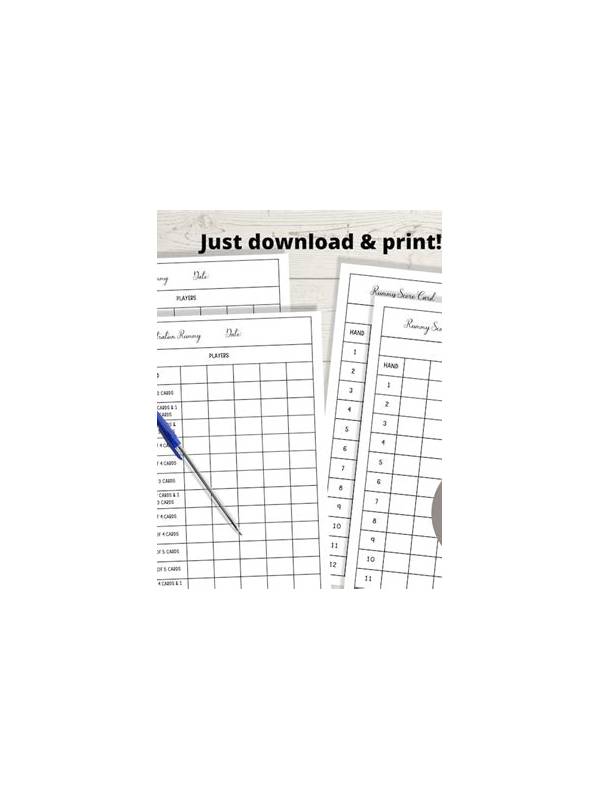
A study journal is most useful when you can maintain it consistently. Long descriptions of every turn often become tiring, so a simple card notation system can preserve the important structure without turning review into another game. The aim is clarity, not a secret code.
Choose one short form for each suit and write ranks consistently. For example, you might use H for hearts, D for diamonds, C for clubs, and S for spades, with A, J, Q, and K for face cards. A seven of hearts then becomes 7H. If your local rules treat jokers specially, use a separate symbol such as Jkr and define it at the top of the page.
Use brackets to mark groups. A completed sequence might appear as [4H-5H-6H], while a set could be [9C-9D-9S]. Cards that are still uncommitted can stay outside brackets. This distinction helps you remember not only what you held, but what you believed each card could become at the time.
Add one letter for the action you took: D for draw, X for discard, K for keep, and M for meld if your notes need that detail. You do not need to record every visible card. Record the card that changed your choice, the discarded card you considered, and the reason for the final move.
Avoid writing conclusions while emotions are high. During a session, capture facts in the margin. Afterward, translate them into one sentence: “I kept a high card because it had two plausible connections.” Then add a confidence mark such as high, medium, or low. This separates what happened from what you believed.
Review several entries together rather than judging one hand in isolation. Look for repeated habits: keeping pairs too long, ignoring a nearly complete sequence, or discarding without checking what information the card revealed. If a notation symbol becomes confusing, simplify it. A journal that you understand six days later is better than a detailed system you abandon after one evening. A useful journal entry can fit on one line: “K: 7H supported a heart sequence; X: 2S because isolated; confidence medium.” Add the table variant and date at the top of a page, not inside every turn. If you use a digital note, avoid storing account credentials, payment details, or private information about other players. The journal is for learning, so it should remain safe even if the device is shared. Over time, consistent notation will show patterns that memory alone tends to blur.