How to Sort a Thirteen-Card Rummy Hand for Faster Decisions
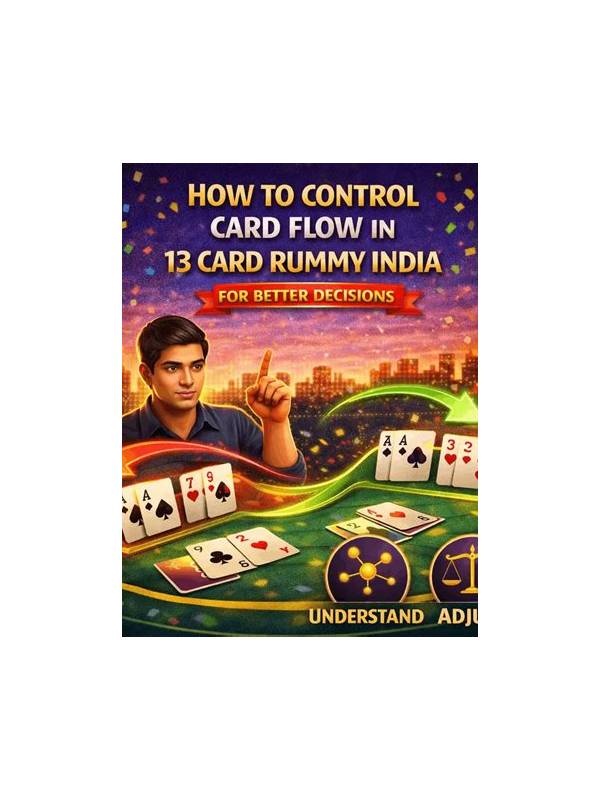
Sorting a thirteen-card rummy hand is more than making it look tidy. A consistent layout reduces the time spent searching for combinations and makes weak parts of the hand easier to notice. The best system is one you can repeat under pressure.
Begin by placing obvious pure sequences together. A pure sequence uses consecutive cards of the same suit without a joker, so it deserves priority when it is already available or close to completion. Keep a small gap between groups rather than spreading every card evenly. That visual separation helps you distinguish a real structure from a hopeful pair.
Place possible sets in a second area. Cards of the same rank but different suits can belong here, even when the set is incomplete. If one card is also useful in a sequence, mark it mentally as a shared card. Shared cards create flexibility, but they can also hide the fact that two groups depend on the same resource.
Put unconnected cards at the far end. Do not automatically call every high card dangerous; a high card can still become part of a sequence. Instead, ask how many plausible improvements it has. An isolated king may need a queen and an ace in the same suit, while a six may connect to several nearby ranks. The count of realistic connections is more helpful than a simple high-versus-low rule.
After every draw, rebuild only the affected groups. Move the new card into its strongest current home, then check whether it has created a better arrangement elsewhere. Before discarding, temporarily remove the proposed card from the layout. If doing so breaks a pure sequence or leaves a group impossible, choose another discard.
Avoid rearranging for decoration. Constantly changing the order can make you lose track of which cards were genuinely useful. In practice, use three zones: confirmed groups, developing groups, and loose cards. The zones should answer three questions quickly: what is already safe, what needs help, and what can probably leave?
Practice this method with random deals and a short timer. The goal is not to force a declaration. It is to identify the hand’s main shape in the first few turns and preserve the clearest route while discarding cards that serve no credible purpose.
If your layout becomes confusing, stop and rebuild it from the cards rather than trusting a previous arrangement. A clean reset can expose duplicate assumptions and prevents one early sorting mistake from influencing every later decision.