Rummy FAQ: When Is a Safe Card Still the Wrong Discard?
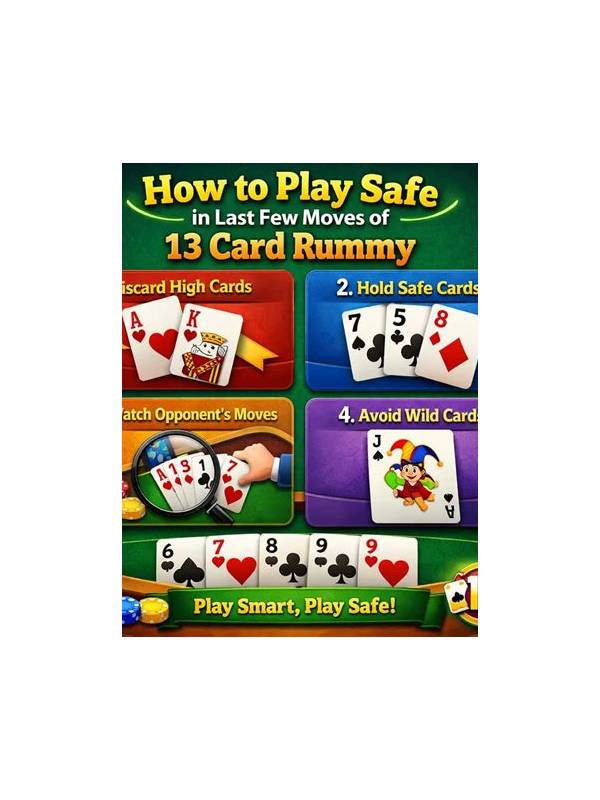
What does “safe discard” mean? It usually means a card that appears unlikely to complete an opponent’s visible plan. Players often judge safety by looking at exposed discards, known melds, or the opponent’s recent choices. That information can help, but safety is only one part of a discard decision.
Why can a safe card be wrong? Your own hand may need it more than the opponent does. Suppose a card is unlikely to help anyone else but connects two of your flexible cards or preserves a route to a required sequence. Throwing it away may leave you with isolated cards and fewer ways to recover. A discard should be evaluated against both external risk and internal value.
How should I compare two safe cards? Compare their future usefulness. Ask which card completes more possible groups, which one is easier to replace, and which one leaves a cleaner hand if the next draw misses. A narrow card with no backup route is often the better release, even if it looks slightly more valuable by rank. You are choosing the card that costs your plan the least.
What if one card is safer but the other has more points? Consider the stage of the deal. Early on, preserving flexibility can be worth more than immediately reducing points. Later, when a declaration or a likely end is close, point reduction and exposure risk become more important. The same card can therefore be correct to keep in one moment and correct to discard in another.
Can I trust the discard pile completely? No. The pile shows actions, not intentions. A player may have discarded a useful-looking card because of a hidden set, a joker, or a different route. Use visible history as a probability clue, not as proof. If the evidence is thin, avoid giving away a card that creates an obvious connection.
What is a practical final check? Before discarding, name the card’s role in your hand, estimate its opponent risk, and identify your replacement plan. If it has no clear role and another card protects more routes, release it. If it is internally important, keep it even when the table suggests it is safe. Strong decisions balance both sides of the choice.
Safety is a useful filter, not a final verdict. If your own structure is deteriorating, the safest-looking discard may create the largest long-term cost. Use the term to prompt comparison, then choose with the whole hand in view.