
Rummy Guide: Decide When a Fragment Has Failed
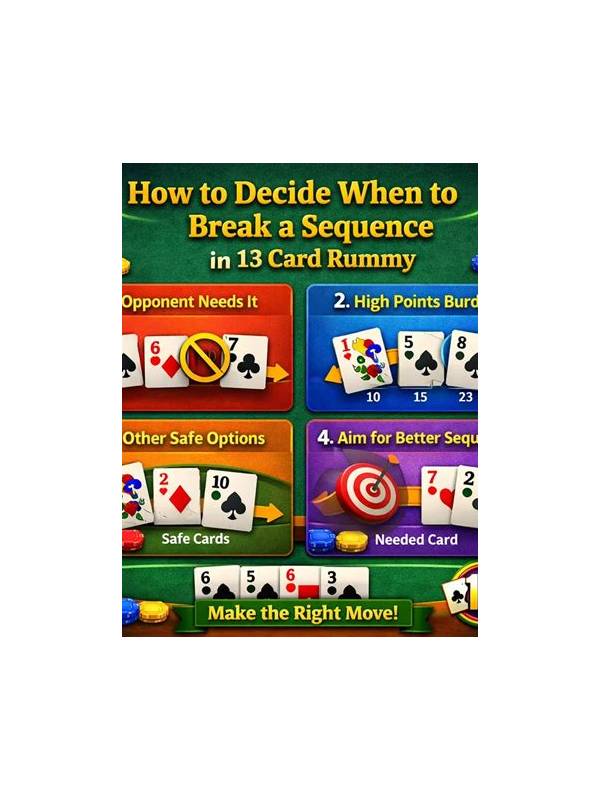
Unfinished fragments are normal in rummy, but keeping every fragment alive can make the hand impossible to organize. Deciding when a fragment has failed is therefore a core skill. Failure does not mean the cards were a bad idea initially; it means their current route no longer earns space.
Test the remaining route. How many unseen cards improve the fragment? Have key neighbors appeared in the discard pile? Would the improvement still leave another missing requirement afterward? A fragment that needs two exact cards late in the hand has usually failed, even if it looked promising at the start.
Compare it with the alternatives. Another fragment may have fewer possible improvements but a much shorter path to legality. A low connector may be worth keeping over a high pair when the pair’s matching copies are visible. The decision is relative to the cards you can release and the time you have left.
Look for evidence from opponents. If a player has taken cards from your fragment’s region, its safety may have decreased. If several related cards are ignored, the route may be less contested, but do not assume ignored means available. Table evidence changes both probability and discard risk.
Set a failure signal before frustration arrives. It might be two consecutive misses, a key card appearing in the discard, or the hand reaching a defined late stage. When the signal appears, break the fragment cleanly and re-sort the hand. Do not keep one card from a failed project out of sentiment.
After the hand, ask whether the failure signal came too early or too late. The goal is not to abandon every plan quickly. It is to make the decision from current evidence rather than from the emotional cost of admitting that an earlier idea did not work. Write the evidence, such as visible needed ranks or remaining draws, rather than describing the result as simply unlucky. Evidence makes the threshold easier to improve.
Sometimes a fragment has not failed but should be downgraded. Keep it as a backup while protecting a stronger route, then release it when the hand needs space. This middle state is useful early, yet it must have a boundary. Without one, a downgraded fragment quietly regains priority whenever a new card looks vaguely related.
Give the downgraded fragment a visible review date in the hand: the next draw or the next table change. Then reassess it without sentiment.


