Rummy Guide: Create a Five-Minute Session Warm-Up

A warm-up is not a promise to play longer or harder. It is a five-minute check that your attention, knowledge, and device are ready for the environment you selected. This small habit can prevent avoidable errors from being mistaken for strategic problems.
Use the first minute for rules. State the format’s objective, the required valid structures, and the main scoring consequence in your own words. If you cannot do this, open the official rules or choose a tutorial. Do not use the warm-up to invent a rule from memory.
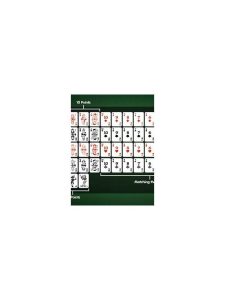
Use the second minute for card recognition. Arrange a sample hand by suit, rank, or the method you normally use. Confirm that text is readable and that the screen responds accurately to taps. If the display is cramped, change the device orientation, text size, or accessibility setting before a real round.
Use the third minute for route identification. Look at a sample hand and name one confirmed route, one flexible card, and one isolated card. You are not trying to solve a puzzle quickly. You are checking whether your attention naturally distinguishes evidence from possibility.
Use the fourth minute for discard review. Pick two possible discards and state what each would preserve and what each would reveal. This exercises trade-off thinking without the pressure of a timer. If your explanation becomes emotional or vague, slow down and restart the comparison.
Use the final minute for boundaries. Set a stopping time, session length, and spending limit of zero or an amount you can genuinely afford to lose if the format involves money. Decide what will make you stop early, such as fatigue, repeated missed checks, or an unstable connection. Keep the warm-up separate from any promotional message or bonus pressure.
The routine should leave you clearer, not more excited to chase a result. If it reveals a problem, switch to practice or stop. A warm-up is successful when it gives you reliable information about whether playing now is sensible and what skill deserves attention.
Keep the same warm-up for several sessions before changing it. Consistency makes it easier to notice whether a problem belongs to the environment or to your preparation. If the rules check always passes but card recognition fails on a small screen, the fix is probably visual rather than strategic. If the device and rules are fine but the boundary check repeatedly gets ignored, reconsider whether the planned session is appropriate today. Write down one observation after the warm-up, then begin only if the conditions still match your limits.