Rummy Comparison: Flexible Space Versus Flexible Cards
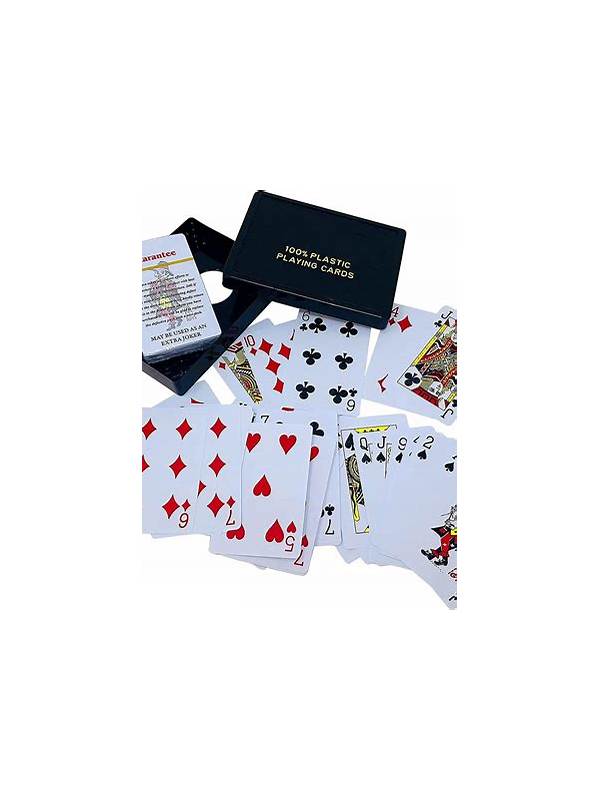
Rummy players often call a hand flexible when several cards seem useful. That description can be misleading because flexibility may belong to a card or to a position in the hand. A flexible card has multiple plausible roles. Flexible space means that a group can accept more than one kind of card. The two forms support each other, but they are not identical.
Consider a middle card in a same-suit sequence. It may connect on either side, so the card itself is flexible. Now consider an empty position between two cards. That position may accept several ranks, so the space is flexible even if the cards already held have only one useful role. In the first case, you own an adaptable resource. In the second, you are waiting for information from the draw.
To compare them, inspect three features. First, count realistic completions rather than every theoretical one. Second, check whether a completion preserves a required pure sequence or only creates a low-priority group. Third, ask whether using the card in one route blocks another route. Flexibility that disappears as soon as you make one ordinary move is less valuable than it first appears.
Flexible cards are often worth protecting when they are low in points and can shift between independent plans. Flexible space can be useful when your hand already contains stable anchors and the missing card is not costly to wait for. Neither should be protected automatically. A high-point card with two theoretical roles may still be a poor hold if both roles need rare draws.
Use a quick comparison during sorting: “What can move?” and “What can be filled?” The first question evaluates card flexibility; the second evaluates space flexibility. Then choose the route with the better balance of completion likelihood and recovery capacity. This keeps you from counting the same uncertainty twice.
The distinction is also valuable in review. If you lost while holding many flexible cards, perhaps the cards were all tied to one bottleneck. If you lost with open spaces but few useful connectors, you may have mistaken empty room for progress. Separating the two ideas produces more accurate lessons and cleaner decisions in the next hand.
The comparison is most helpful when you say which resource is being spent. Waiting spends time and possibly points; moving a flexible card spends future options. Naming the resource makes a trade-off visible, so you can choose deliberately instead of assuming that any arrangement with more open spaces must be better.