Rummy Strategy: Separate Evidence from Assumption
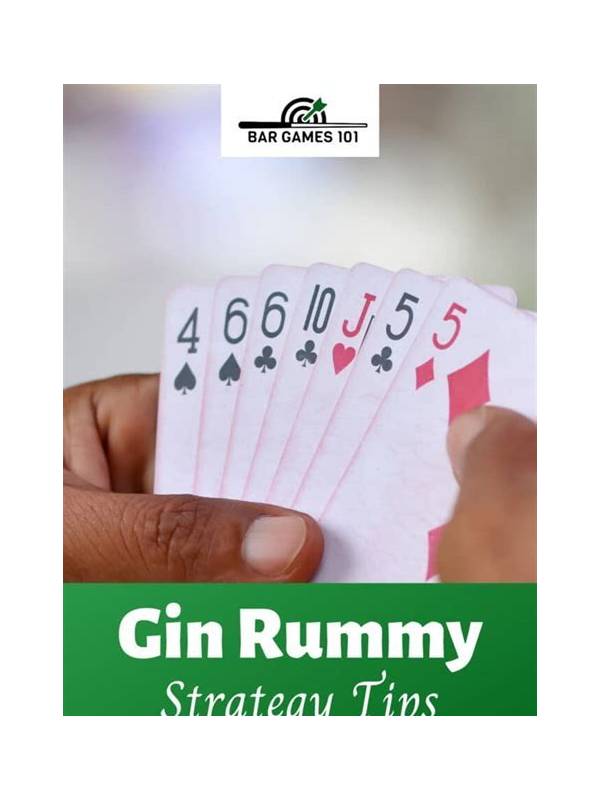
Rummy creates a strong temptation to tell a story about the unseen deck. You may decide that an opponent is collecting a suit or that a missing connector is likely to arrive. Stories can be useful hypotheses, but they become dangerous when they are treated as evidence.
Create two mental columns. In the evidence column, place only observable facts: cards in your hand, public discards, exposed melds, the number of turns passed, and any clearly displayed table rule. In the assumption column, place interpretations such as “the opponent probably needs this rank” or “the next draw may be a heart.” Keeping the columns separate makes uncertainty visible.
Use evidence to improve your own hand first. If a visible card has reduced the number of possible completions for your route, downgrade that route. If an opponent takes a card from the discard pile, record that they selected it, but do not claim to know which group they intend to build. Their later discards may support or weaken the hypothesis.
When a decision depends on an assumption, run a two-case test. Ask what you would do if the assumption were true and what you would do if it were false. If the same action remains sensible, the uncertainty is not very important. If the actions differ, prefer the choice that protects your hand under both cases, or wait for another observable clue.
Avoid using probability language casually. “Likely” should mean that several independent pieces of information point in the same direction, not simply that you want a card. Similarly, “safe” should mean lower risk relative to your alternatives, not impossible to use by another player.
At the end of a session, review one assumption that proved wrong. Do not criticize yourself for failing to read an unseen hand. Instead, ask whether the assumption was clearly labeled as a guess and whether your action still had a reasonable fallback. This turns an error into calibration practice.
Good rummy judgment is not the elimination of uncertainty. It is the ability to act while knowing which parts of your reasoning are solid and which are provisional. Once that distinction becomes habitual, public information helps you without making your decisions depend on imagined certainty.
You can make the distinction visible with simple language. Say “I saw two cards from that suit” instead of “that suit is dead,” and “this discard may be useful” instead of “the opponent needs it.” Precise wording does not guarantee a correct decision, but it prevents an assumption from quietly becoming a rule.