Rummy Tips: Use a Two-Stage Plan for Uncertain Draws
Uncertain draws are normal in rummy. The mistake is not failing to predict the exact next card; it is making a plan that works only if one specific card appears. A two-stage plan keeps you moving while preserving a practical alternative.
Stage one is the immediate objective. Choose the group that would benefit most from the next few draws. This might be a nearly complete sequence, a pair that can become a set, or a loose card that should be replaced. Keep the objective narrow enough to guide your discard. If you are trying to improve every group at once, the plan will not help.
Stage two is the fallback. Decide what you will do if the expected card does not appear after a reasonable number of turns. The fallback should use cards already in your hand, not a wish for a different deal. You may merge two partial runs, change the target suit, or abandon the weakest project. A fallback prevents sunk-cost thinking because you have already defined when to change course.
Use a simple trigger rather than an emotional judgment. For example, after two unhelpful draws, reconsider an isolated project. If a needed rank has appeared in the discard pile, lower your confidence in that route. If a new card creates a clean group, promote it above the old objective. The exact trigger can vary, but it should be visible before frustration takes over.
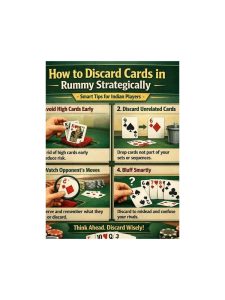
Discarding becomes easier with this structure. First remove a card that does not help either stage. If every card has a role, compare the role of each card with its point exposure and number of possible improvements. Avoid discarding a safe-looking card just because it is not part of stage one; it may be essential to stage two.
At the end of the round, review whether your fallback was realistic. Did it depend on too many specific cards? Did you change too late? Did you keep a weak project because it had once looked attractive? These questions improve planning without pretending that luck can be controlled. A two-stage plan is not a guarantee of success. It is a way to make uncertainty manageable and decisions explainable. Keep the plan proportional to the stakes and your attention. In a practice round, you can test a more experimental fallback. In a serious or unfamiliar format, favor the route whose rules and scoring you understand. Planning is successful when it limits avoidable confusion, even if the final result remains uncertain.