
Indian Rummy Tips: Use a Waiting-Card Budget
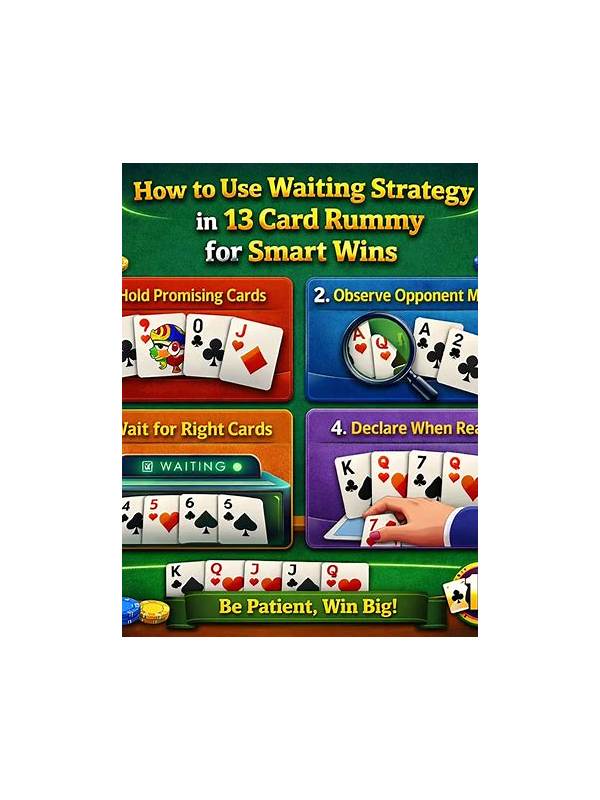
A rummy hand can contain several attractive possibilities at once. One pair may become a sequence, another card may complete a set, and a high card may appear useful because it could connect in two directions. The danger is quietly depending on too many exact draws. A waiting-card budget gives you a simple way to notice that problem.
Begin with the groups you already trust. Count the exact cards needed to complete each unfinished idea. If two cards are adjacent in the same suit, the plan may need one neighbor; if the ranks are separated, it may need a particular middle card or a more complicated rearrangement. Do not count every theoretically possible card. Count only the cards that would make the group useful under the table’s rules.
Then add the requirements together. A hand that needs one card for a pair, one different card for a second pair, and another exact card for a set may be carrying three separate waits. That can be acceptable early in a round, but it should not be treated as a nearly finished hand. The budget is a warning light, not a mathematical promise.
Reduce the budget by protecting multi-purpose cards. A card that can join either of two nearby sequences is more valuable than one that has only a single exact destination. Keep it while it preserves real alternatives, but do not confuse flexibility with completion. If a card has many imagined uses but no confirmed group, mark it as uncertain.
As the round develops, tighten your standard. Early on, you can tolerate several open waits while information accumulates. Later, release the wait with the weakest evidence, especially when it carries high points or blocks a confirmed group. A useful rule is to ask, “If this card misses again, what is my next best plan?” If the answer is unclear, the budget is too large.
This approach makes drawing less emotional. You are not chasing every possible improvement; you are choosing how many unknowns your hand can reasonably carry. A smaller waiting-card budget usually produces clearer discards, better protection against large penalties, and a more honest view of how close the hand really is.
Use the budget in review as well. Count how many exact waits you carried at the beginning, middle, and end, then ask when the hand became too dependent on luck. You do not need probability calculations. A note such as “three narrow waits remained after the second turn” can reveal a pattern. The goal is not to remove all risk, but to prevent risk from becoming invisible while one hopeful route receives all your attention.


