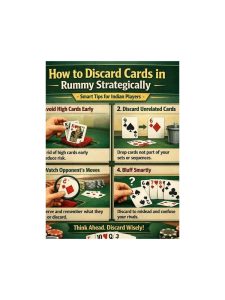
Rummy Comparison: Immediate Gain Versus Future Repair Cost
Many rummy decisions look good because the first effect is visible. A card joins a pair, a high-point card leaves, or a discard seems safe. The less visible question is what repair work remains afterward. Comparing immediate gain with future repair cost helps explain why a smaller-looking move can be stronger.
Define the immediate gain in concrete terms. It might be one confirmed group, a lower penalty total, or a reduction in the number of unresolved cards. Avoid vague descriptions such as “better shape” unless you can point to the exact cards that improved. A clear gain provides a fair starting point for the comparison.
Then inspect the remainder. How many cards still need a home? Does the move leave a narrow waiting card, a high-value singleton, or a group that conflicts with another route? Repair cost is not just the number of cards remaining. It includes how many specific connections are needed, how easy those connections are to replace, and whether the hand can remain legal while the repair happens.
Information can add to the cost. Taking a visible discard may create immediate progress while showing another player a likely route. Discarding a connected card may make your own plan less obvious but destroy a flexible option. Include this information cost in the comparison when the table is attentive or the hand is late.
A useful note might read: “Move A gains one pair but leaves two expensive singles; Move B gains less now but leaves a broad sequence route.” Neither statement is a guarantee. It simply puts the trade-off in view. Revisit the comparison after the next draw, because a repair cost can fall quickly when a connecting card arrives.
This method is especially helpful when a move feels emotionally satisfying. Completing something immediately can feel safer than keeping an unfinished route, but satisfaction is not structure. Ask which choice leaves a hand you can continue to manage. The best move often balances visible progress with a remainder that is cheap, flexible, and easy to review.
When comparing two choices, use the same questions for both. Unequal standards can make the familiar route seem safer simply because it is easier to describe. Note the immediate gain, remaining repair, information revealed, and timing. A consistent comparison will not remove uncertainty, but it will make the trade-off visible enough to support a disciplined choice. That consistency also makes later review easier. You can see whether the problem was an underestimated repair cost, an overlooked information cost, or a timing error. Naming the category is more useful than simply recording that the move “felt wrong” afterward.