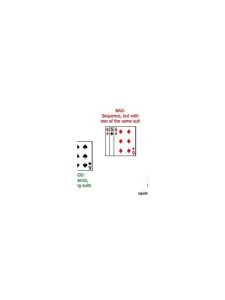
Rummy Comparison: Keeping a Pair Versus Keeping a Sequence

A pair and a partial sequence can both look valuable, but they offer different kinds of potential. A pair of the same rank may become a set if one matching card appears. A connected same-suit sequence can grow in one or two directions and may contribute to a required sequence. The better choice depends on flexibility, the rules, and what the rest of your hand already supports.
Count the missing cards rather than judging by appearance. A middle pair often has several matching possibilities across the deck, while an edge sequence may have only one useful extension. On the other hand, a pair can compete with the same rank already held by other players, and keeping it may tell you little about whether the needed card remains available. Neither structure is automatically superior.
Look at overlap. If one card belongs to both a pair plan and a run plan, it has special value, but it can also create indecision. Decide which plan is primary and set a deadline for the other. If the next few turns provide no support, release the weaker idea. Holding both plans forever may leave you with too many unfinished groups near the end of the hand.
Consider what a discard would communicate. Dropping a card from a pair may make the rank easier for another player to read, while breaking a sequence can expose a suit preference. Information matters, but it should not override clear hand improvement. A low-value card that blocks a legal arrangement is still a candidate even if the discard feels revealing.
Use a simple rule when uncertain: keep the structure that is closer to a legal group, has more useful extensions, and fits your existing primary plan. If the comparison remains even, remove the higher-risk or higher-point card. Reassess after the next draw; a comparison is only a snapshot, not a permanent commitment.
The table format can change the balance as well. In a points game, preserving a low-penalty fallback may be more important than pursuing a beautiful sequence. In a format with a specific required group, that requirement can dominate the comparison. Check the rule summary before applying a general principle. When you are practicing, compare the same hand under different formats to see how scoring and legality alter the preferred choice. Remember that a pair can have social value as information too: another player may avoid a rank you have shown interest in, or may expose a useful discard. Such clues are uncertain, so use them as a tie-breaker rather than proof. The strongest comparison still comes from the groups you can legally form with the cards currently available.