Rummy FAQ: What Should You Do When the Draw Pile Shrinks?
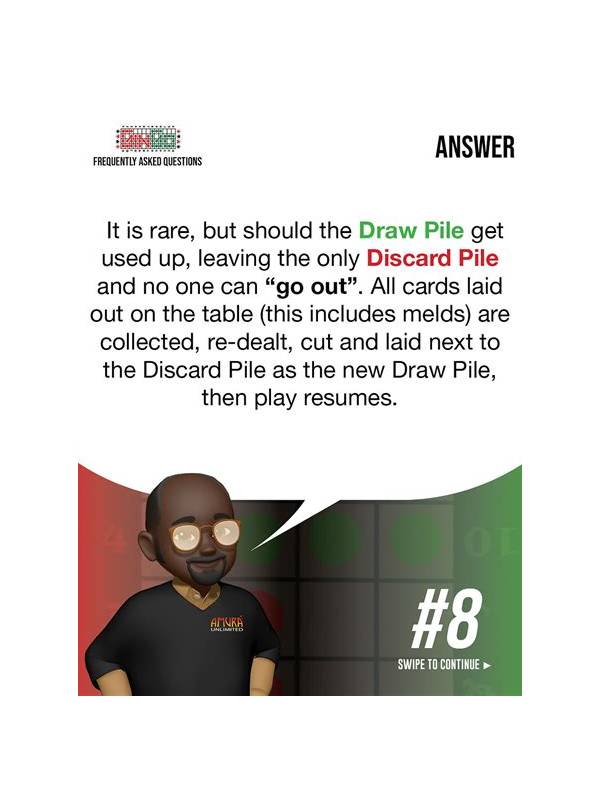
When the draw pile becomes small, a rummy hand enters a different phase. Cards that seemed harmless earlier may now be expensive to hold, and a plan based on a distant improvement may no longer be sensible. The exact rule for an exhausted pile varies by format, so first confirm what happens when no cards remain. Then adjust your decisions to the shorter horizon.
The first adjustment is to reduce the number of active plans. Early in a hand, two or three developing routes can be useful because you have time to collect evidence. Near the end, each route consumes attention and often leaves extra cards stranded. Keep the plan with the clearest legal value and the best chance of completion. A route that requires several unrelated cards is usually less attractive than a slightly less elegant route that needs only one improvement.
The second adjustment is to review penalty exposure. If a close player ends the hand, ungrouped high cards can matter more than their potential future value. This does not mean discarding every high card immediately. It means asking whether the card has a realistic job within the remaining turns. A king waiting for a narrow sequence may be a poor investment when the pile is nearly gone, while a medium card that can join two live groups may deserve another turn.
The third adjustment is to use visible information carefully. Count cards that have already appeared in your hand and in the discard pile, but do not assume unseen cards will arrive simply because they are theoretically available. If multiple copies of a needed rank are visible elsewhere, downgrade that route. If a player repeatedly avoids a suit or rank, treat the pattern as a clue rather than proof. Near the end, one new card can change the decision, but a guess should not be mistaken for evidence.
You should also protect the order of your turn. A useful card from the discard pile may be less valuable if taking it forces you to reveal the card you release. Conversely, passing on a visible improvement can be costly when only a few draws remain. Compare the immediate structural gain with the information you give away and the quality of the replacement discard.
If the pile is exhausted, follow the table rule calmly and score the hand as required. The lesson for future rounds is to create an endgame checkpoint before the pile becomes critical. When only a small number of draws remain, narrow the plan, lower penalty risk, and stop treating every possible improvement as equally likely.