Rummy Guide: Evaluate a Discard by Information Risk
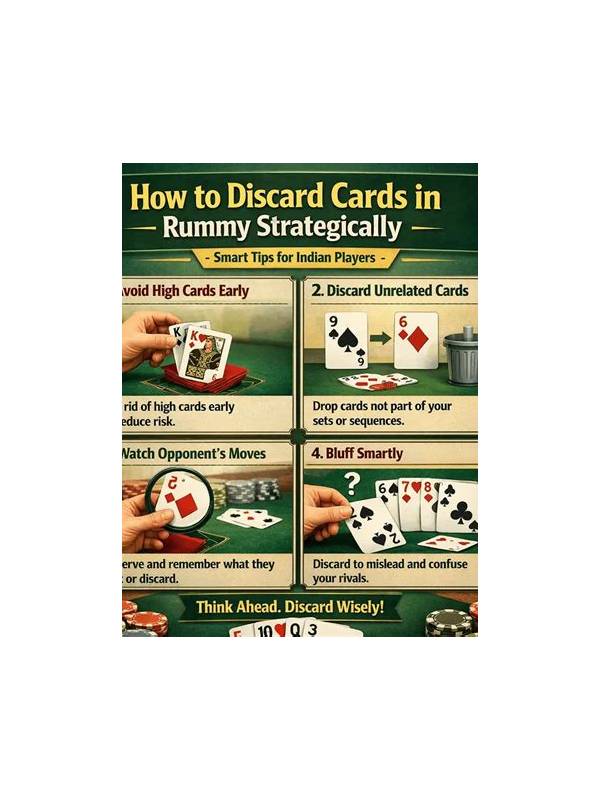
Discarding is not only a way to remove an unwanted card. It also changes what other players can infer about your hand. A useful review therefore asks two questions: does this card have a job in my plan, and could its absence or arrival give someone else an easy clue? Thinking in those terms improves decisions without requiring perfect knowledge of opponents.
Start with your own hand. List the cards that are already part of a confirmed group, the cards supporting a realistic candidate, and the cards with no current connection. A card with no job is usually a stronger discard candidate than a card that completes a useful backup route. This first filter prevents fear of information from making you keep unhelpful cards.
Next consider the visible context. If a card is close to several ranks in a suit, another player may value it as a connector. That does not make it automatically dangerous; you cannot avoid every useful discard. Instead, compare the cost of holding it with the possible benefit you give away. A high-point card with no route may still be correct to release even when it could help someone.
Avoid inventing a story from one pickup. If an opponent takes a card, record the observation as evidence rather than certainty. They may be building a sequence, protecting a pair, or simply choosing the least bad option. On your next turn, look for a second signal before changing your whole plan.
For practice, review five turns after a session. For each discard, write its current job, its point value, and the most obvious way it might help another hand. Then ask whether your decision would change if you had to make it again with the same information. This creates a calm decision record and separates useful caution from hindsight.
The goal is balanced awareness. Protecting every potentially useful card leaves your own hand crowded and expensive. Ignoring information entirely can give away a simple route. Choose the discard that best improves your hand while accepting that some uncertainty is unavoidable.
One practical test is to imagine the next two turns. If you keep the card, what draw would make that choice worthwhile? If you discard it, what is the realistic downside? Naming both outcomes prevents a vague fear of helping an opponent from dominating the decision. It also makes the choice easier to review later, because you can compare the prediction with what actually happened. The best discard is often the one that improves your own position now while leaving you able to adapt when the table provides new evidence.