Rummy How-To: Build a Discard Queue for Difficult Hands
Create the queue
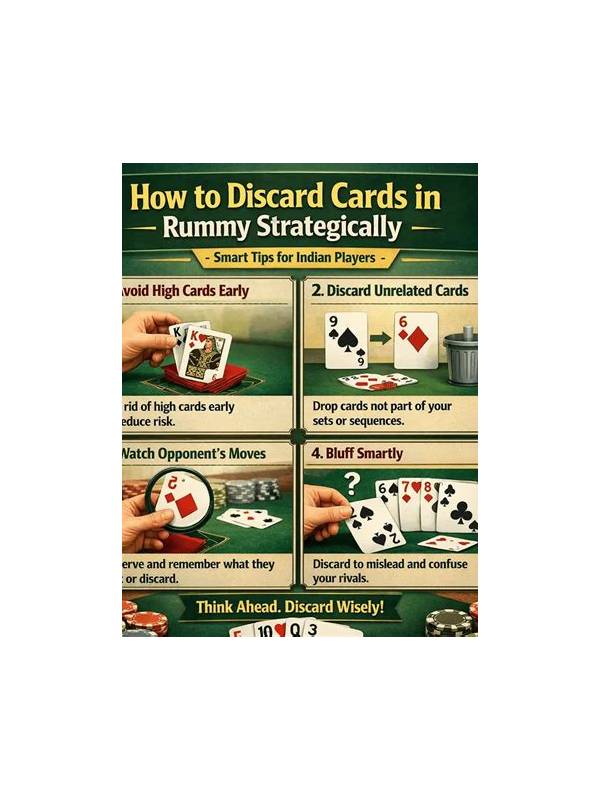
When a hand contains several weak cards, choosing from scratch every turn can waste attention. A discard queue is a short ranked list of likely exits. It is not a fixed commitment; it simply records which cards currently contribute the least and why.
Begin with the card that has no clear relationship to another card. Place it first only after checking its value under the rules you are using. Next consider cards tied to distant or overlapping plans. Put a card later in the queue if it has a credible route or protects a near-complete structure. Three or four entries are usually enough; a long list becomes another distraction.
Add a reason beside each entry mentally: isolated, duplicated role, expensive if stranded, or dependent on one narrow draw. Reasons matter because the ranking should change when the hand changes. A card that was isolated may become useful after a matching draw, while a previously strong connector may lose its purpose when its partner is released.
After drawing, test the new card against the queue. If it completes a group, keep it and move the weakest card down only if the new arrangement actually improves the hand. If it creates a route, compare that route with the current first queue entry. Do not automatically discard the oldest card simply because it was already marked.
Before discarding, check whether the queue’s first card is safe to expose under your format. If opponents may benefit from it, compare that risk with the value of keeping it. A low-contribution card can still be a poor discard if it gives away a needed signal. This is a secondary consideration, not a reason to retain every uncertain card.
The queue is most useful late in a hand, when a clear exit prevents rushed decisions. Keep it flexible, update it after each draw, and use it as a record of current evidence. It provides structure without pretending that a difficult hand has a guaranteed solution. Avoid making the queue public or using it to justify impulsive play. It is a private decision aid, not a prediction about another player. If a new card clearly improves a lower-ranked route, promote that route and demote the old first choice. If several queue entries become equally weak, choose the card with the lower penalty or the cleaner next draw. You can also empty the queue after a major restructuring and build it again. Starting over is sometimes more accurate than preserving rankings that belonged to an earlier hand shape.