Rummy How-To: Build a Last-Three-Turn Contingency Plan
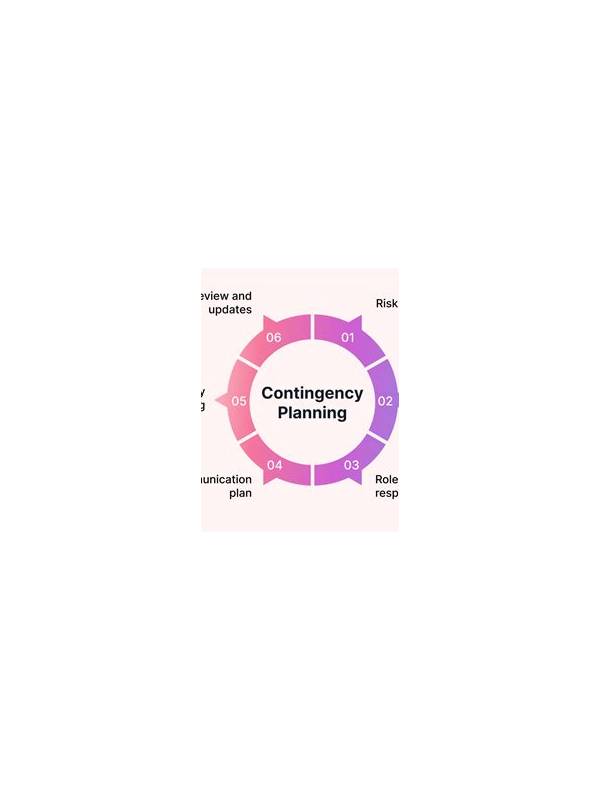
The final turns of a rummy hand can compress several decisions into a short window. A last-three-turn contingency plan gives each remaining turn a purpose. It is not a prediction that the hand will last exactly three turns. It is a way to decide what to protect, what to release, and when to stop chasing a narrow improvement.
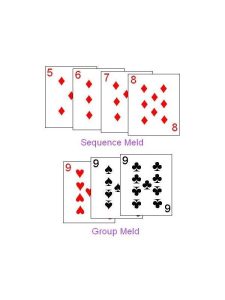
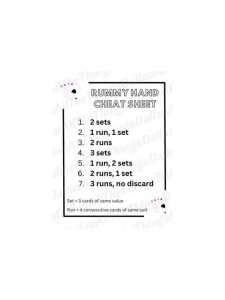
Begin by checking the legal requirements for a declaration. Identify the groups that are already confirmed, the group closest to completion, and the cards that would still be ungrouped if no useful draw arrives. This is the baseline. A contingency plan built on an unverified group can create false confidence at the worst moment.
For the first turn, choose the best improvement card and the discard that preserves the most realistic routes. For the second, define what you will release if the improvement misses. For the third, prioritize penalty reduction and a legal structure over an attractive but unlikely pattern. Write these choices in plain language if you are practicing away from a table.
Include a rule for a joker or other flexible card. Decide which group has the greatest need and what alternative remains if the card is moved. Flexibility is useful only when you know where it belongs. Also decide when you will stop rearranging; repeated movement can create a mistaken view of what is actually legal.
Keep the plan adaptable to new information. A useful connector can move the hand directly to verification, while an opponent’s action can change the value of a discard. The plan should guide attention, not override the current cards and rules.
After the hand, compare the three planned stages with what happened. Did you protect too many possibilities? Did the final turn need a simpler safety rule? Small adjustments make the next contingency plan more accurate. Preparation cannot control the draw, but it can keep urgency from controlling the decision.
Include a stop condition for a declaration attempt. If the hand is legal and the relevant groups have been checked, avoid changing cards just to make the arrangement look neater. If the hand is not legal, identify the single most important defect first. Fixing one known defect is usually clearer than optimizing every group at once.
Use the plan as a learning tool even when the hand ends sooner. Ask which stage would have been activated and whether the priorities were sensible. This makes the plan more useful than a ritual and helps adapt it to different formats.