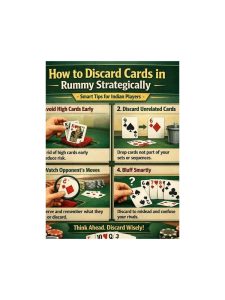
Rummy How-To: Use a Two-Stage Discard Routine
Discarding quickly can feel efficient, but speed often hides a missed connection or an avoidable penalty. A two-stage routine keeps the decision short while giving it enough structure. Stage one improves the hand; stage two checks what the discard reveals.
In the first stage, identify the cards that are doing the least useful work. Look for isolated high cards, duplicate cards that compete for the same route, and pieces whose only improvement is exact. Compare them with cards supporting a completed group, a flexible sequence, or more than one plan. Select two likely discard candidates rather than judging every card equally.
In the second stage, test each candidate against three questions. Could this card complete a realistic route for another player? Does removing it break a group you may need later? Would discarding it reduce your own points or flexibility more than the alternative? These questions do not require perfect knowledge. They simply stop a locally attractive discard from creating a larger problem.
When the draw came from the discard pile, add one more question: what information does returning a related card communicate? You do not need to hide every clue, but avoid discarding a card that directly advertises the route you have just pursued when another safe candidate is available.
Keep the routine under a minute in a timed game. If the first candidate is clearly isolated and costly, use the second stage as confirmation rather than searching for a clever move. In practice, write down the two questions you forget most often and keep them beside your training notes.
The value of this method is consistency. It gives you a repeatable pause without turning every turn into a long analysis. Over several sessions, record which discarded cards later mattered. The record should improve your judgment, not encourage regret about information you could not have known at the time.
You can adapt the second stage to the format you are playing. In a quick round, use only the strongest alternative and the most obvious opponent clue. In a slower practice round, name two alternatives and write down why one won. The structure stays the same even when the amount of detail changes, which makes the routine easy to carry between tables and devices.