Rummy Score Math for Faster, Calmer Decisions
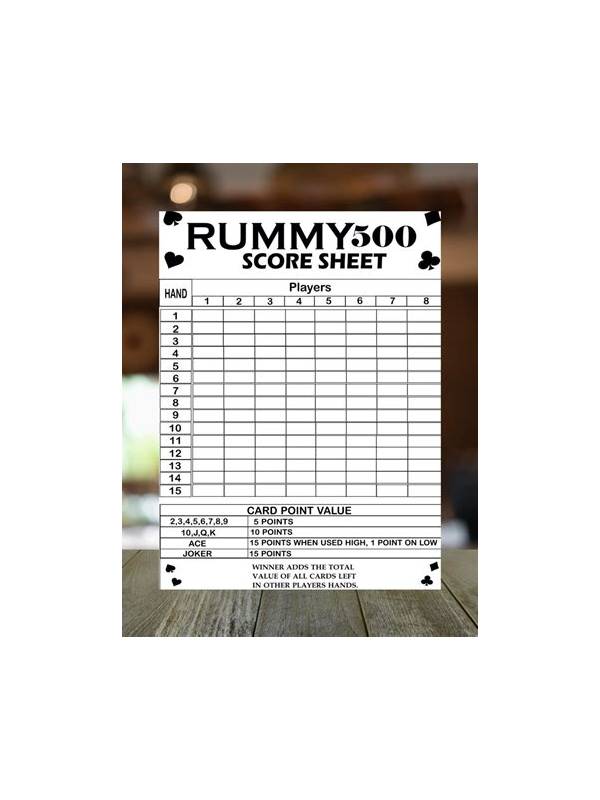
Rummy score math is most useful when it makes a decision clearer. It becomes harmful when a player tries to calculate every possible future at the table. A practical approach is to estimate only the cost of the cards that are not yet protected by a convincing meld. This gives you a quick reason to prefer a cleaner hand without pretending that every draw can be predicted.
Start by separating confirmed groups from candidates. A confirmed group follows the format’s rules and does not need another card. Candidate cards are still waiting for a connection. Add the approximate penalty value of the weakest candidates, especially isolated high cards. In many formats, removing an exposed high card can matter more than preserving a speculative pair, unless that pair has several realistic improvement cards.
Now compare two possible discards. For each one, ask what remains if the card leaves. One choice may reduce immediate points but destroy your only promising route. The other may preserve a route while leaving a costly single. Write down the rough totals, then consider flexibility as a second measure. A slightly higher total can be acceptable if the remaining cards have several useful directions.
Do not confuse score reduction with progress. Discarding a high card feels productive, but it may be poor if it removes the connector needed for a natural sequence. Conversely, holding a low card is not automatically wise if it has no believable role. Score math is a filter, not the entire strategy.
For practice, pause after a few sample hands and record three numbers: protected points, exposed points, and the number of plausible routes. Compare the estimate with your later result. You will learn which kinds of holdings you routinely overvalue. During live play, use only a rough category such as low, medium, or high exposure. The purpose is a calm comparison, not perfect arithmetic.
You can make the method faster by assigning familiar cards to broad bands before the hand begins. High cards usually deserve more scrutiny, while low cards can still be important connectors. Middle cards often need the most contextual judgement because they may be useful in several sequences. These are starting points, not automatic rankings. When the table uses a scoring system you do not know well, pause and verify the published rules before relying on arithmetic. Never assume that a remembered value applies to every variation. Clear rule knowledge is part of good score management.