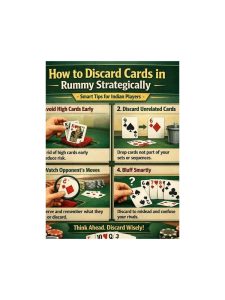
Rummy Strategy: Keep a Fallback Route Visible
A primary plan is useful, but a hand becomes fragile when every decision depends on it succeeding. Keeping one credible fallback route visible lets you change direction before disappointment turns into rushed play. The fallback should be simple enough to remember and strong enough to justify its space.
After arranging the hand, name the primary route and the fallback separately. The primary route might complete an open sequence. The fallback could be a set using two compatible cards, or a different sequence that shares only one bridge. Avoid listing every theoretical possibility. If there are five routes, there is usually no real fallback; there is only clutter.
Compare the routes by requirements. Which cards would each route need? How many turns can you reasonably give it? What cards would have to be released if you switched? A fallback with a low replacement cost is more useful than one that would require dismantling a confirmed group. It should also leave a manageable remainder if it becomes the final plan.
Set a trigger before the hand becomes urgent. The trigger could be a certain number of unhelpful turns, the appearance of a stronger connecting card, or a rising point total among loose cards. A trigger is not a prediction about the next draw. It is a promise to review the plan using evidence rather than frustration.
When the trigger occurs, compare current information instead of automatically switching. The primary route may still be superior, or the fallback may have lost its own support. If switching, move deliberately: protect confirmed groups, release the weakest speculative card, and check whether the new arrangement is legal under the applicable rules.
A fallback does not mean playing timidly. It is a way to preserve decision quality when uncertainty lasts longer than expected. By keeping a second route visible and giving it a review trigger, you avoid both extremes: clinging to a dead idea and abandoning a good plan after one ordinary delay.
The fallback should never be used to justify keeping every card. Limit it to the smallest collection that can support a genuine alternative. If it needs too many exact cards, downgrade it to a possibility and release the weakest support. This distinction preserves flexibility without confusing possibility with probability. When the fallback becomes the primary route, rename it mentally and create a new, smaller fallback if one exists. This keeps the hand’s hierarchy current. The labels should describe the present position, not preserve the order in which the ideas first appeared.