How to Prepare a Constrained Rummy Practice Hand
Record the intended skill and acceptable options before drawing. A fair exercise teaches comparison instead of rewarding a hidden answer known only to its creator.
Keep the constraint narrow enough to explain. If the hand is difficult because of three unrelated conditions, simplify it before repeating the drill. Clear difficulty produces a clearer lesson and makes progress easier to measure.
Random hands are useful, but they can make practice goals hard to see. A constrained practice hand is designed around one condition, such as a difficult opening, a limited number of useful connectors, or a forced comparison between two discards. The aim is not to manufacture a win. It is to make one decision pattern easier to observe.
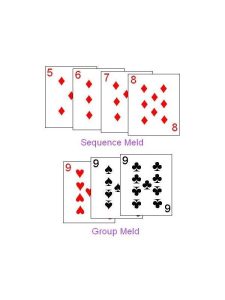
Choose the skill first. If you want to practise sequence planning, create a hand with two incomplete runs and several unrelated cards. If you want to practise low-point management, include a completed group beside high-value singles. If you want to practise rule checking, build a hand that looks complete but contains one invalid group. Keep the condition explicit so the exercise does not become a general puzzle.
Prepare the cards using the rules of the format you are studying. You can deal from a standard deck, use an approved practice tool, or write a sample hand on paper. Do not quietly change the rules to make the hand convenient. Record the format, hand size, joker rules, and the target skill at the top of the exercise.
Give yourself a decision limit. For an opening exercise, allow one minute to sort and identify routes. For a discard exercise, list two candidates and write one reason for each. For an endgame exercise, perform a declaration audit before looking at a model solution. A limit prevents endless rearranging and shows how the skill behaves under ordinary time pressure.
Review the process in two stages. First, ask whether your action followed the stated skill. Second, ask whether another legal option was better supported. Do not judge the exercise only by whether a target card appeared. If the goal was to compare routes, the quality of comparison matters even when the draw is unhelpful.
Change only one constraint in the next version. Add a joker, remove one connector, or alter the scoring pressure, but do not redesign the entire hand. This creates a small progression and reveals which part of the situation causes difficulty. Constrained practice works best when the lesson is narrow, repeatable, and connected to a decision you can name.