Rummy Comparison: Playing for Completion Versus Reducing Exposure
Two broad approaches appear in difficult rummy positions. Completion-focused play tries to assemble the required groups as efficiently as possible. Exposure-focused play reduces high-point cards, narrow dependencies, and other risks while preserving a reasonable route. Neither approach is always correct. The position determines which objective deserves priority.
Completion-focused play is attractive when the hand already has strong structures and only one or two pieces are missing. It keeps attention on the required groups and may justify holding a card that is temporarily expensive. Its danger is tunnel vision: the player keeps chasing the final piece while ignoring that the route has become fragile.
Exposure-focused play is useful when the hand is scattered, the target route depends on one card, or the round may end before the plan develops. It favors lower-risk discards, flexible middle cards, and preserving a backup. Its danger is becoming so cautious that no meaningful structure is built.
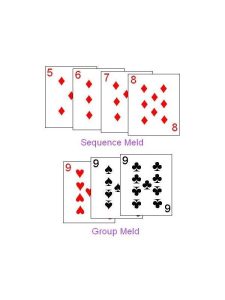
Compare the approaches with three questions. How close is the hand to a rule-valid arrangement? What is the cost if the next draw misses? How much time and flexibility remain? A nearly complete hand with low exposure can keep pursuing completion. A hand with several isolated high cards may need exposure reduction before any ambitious route is justified.
The choice can change within the same round. After a useful draw, switch toward completion if the new structure is reliable. After repeated misses or a lost route, switch toward reducing exposure. Make the switch explicit by naming the objective. This avoids half-committing to a completion plan while making defensive moves that no longer support it.
Review the outcome without judging the approach by the final result alone. A completion attempt can be sound even if the target card never arrives. An exposure-focused decision can be sound even if a later draw would have completed the original route. Ask whether the objective matched the evidence available at the time. That is the comparison that improves future decisions.
The approaches can also be combined. Protect a secure sequence while reducing the most dangerous isolated card, then return to completion when the hand is safer. This is not indecision if the transition is explicit. Write down which risk is being reduced and which route remains active, so defensive play still has a clear direction.
The key is to review the objective after each meaningful draw. If the hand becomes safer, completion may deserve more attention; if it becomes more exposed, simplify again.