Rummy How-To: Build a Discard Record Without Slowing Down
Keep the record small
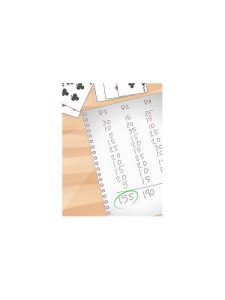
Tracking every card in detail can become a distraction. A useful discard record should answer only the questions that affect your next decision. Record the rank and suit of visible discards, note cards that were picked up, and mark any repeated area of interest. You do not need a complete reconstruction of the deck to make better observations.
Use a simple line such as “8H out, 3C taken, two middle spades seen.” If you are playing on a phone, a small note beside the device may be easier than switching between apps. If notes are not allowed or practical, group the information mentally by suit and rank rather than trying to retain a long sequence of individual cards.
Separate facts from interpretations
Write what happened before writing what it might mean. “Opponent took the visible nine” is a fact. “Opponent is building a nine sequence” is an interpretation. The second may be right, but it is not confirmed. Keeping the two layers separate reduces overconfidence and makes your notes more useful during review.
A good record also notes absences carefully. If several cards from one suit appear in the discard pile, that may lower the chance of completing a particular route, but it does not prove that the route is impossible. Unknown cards remain unknown. Use phrases such as “less attractive” or “needs confirmation,” rather than turning a clue into a rule.
Check the record at natural pauses
Review your notes after your own draw, after an opponent takes a visible card, and before you commit to a narrow plan. At each pause, ask three questions: Which of my routes lost support? Which route gained evidence? Is the next discard based on my hand or on a story about someone else’s hand?
These checks should take seconds. If recording makes you miss the turn clock or forget your own groups, simplify the system. The purpose is to improve attention, not to create a second game inside the first one.
Review after the hand
Afterward, compare your recorded facts with your conclusions. Did a repeated discard actually matter? Did you treat one pickup as proof? Did the information help you avoid a poor hold, or did it merely make the session feel more analytical? Keep the parts that changed decisions and remove the rest. A compact, honest record is more valuable than a detailed notebook that nobody can maintain.