Rummy How-To: Reconstruct an Opponent’s Likely Need Carefully
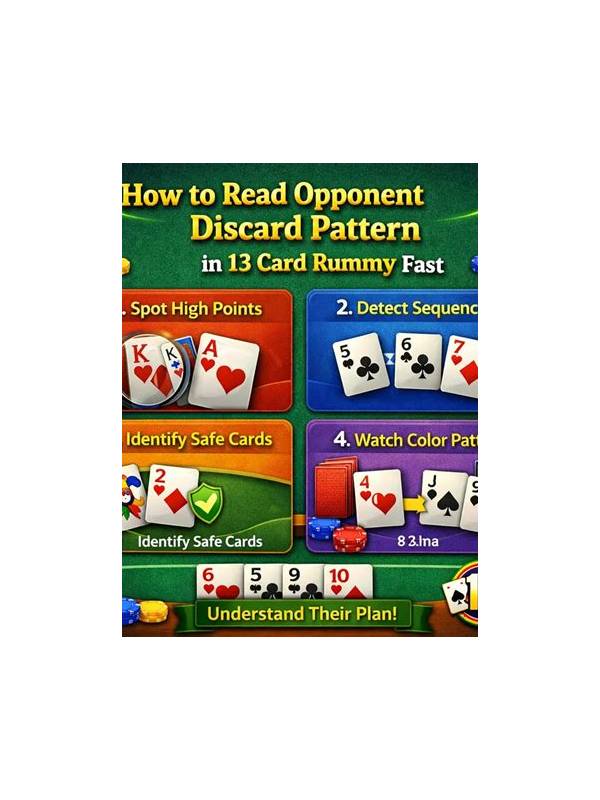
Reconstructing an opponent’s likely need can help you choose between close discards, but it should remain a tentative exercise. The aim is to notice patterns, not to invent a complete story from one card.
Begin with observable facts. Record the ranks and suits an opponent has taken or released when that information is visible. Note whether the choices were isolated events or part of a repeated pattern. A single pickup may be opportunistic; several connected choices provide stronger evidence, though they can still reflect a plan that later changed.
Group clues by possible purpose. An opponent may be collecting a sequence, building a same-rank set, or reducing a high-point card. Keep at least two interpretations when the evidence is weak. For example, a discarded middle card could indicate that a suit is unwanted, or it could simply have become unnecessary after a new draw.
Use the picture only as a tie-breaker. First protect your own required groups and sensible routes. If two candidate discards are otherwise similar, you may prefer the one that is less likely to complete the opponent’s visible pattern. Do not break a strong pure sequence merely to avoid a speculative gift.
Update the picture after every meaningful action. New cards can make an earlier interpretation obsolete. Also remember that hidden cards create a hard limit: an opponent may already hold the card you think they need, or may be pursuing a route that has not appeared in the discard history.
Avoid language that creates false certainty. Say “this card may support their visible route,” not “they definitely need it.” That wording keeps your decision flexible and reduces the temptation to explain every action as intentional signaling.
A careful reconstruction is a compact evidence check: facts, two possible interpretations, your own priorities, and a cautious tie-break. Used this way, table reading adds useful context while leaving room for the unknown cards that make rummy unpredictable. n+Keep the reconstruction short enough to fit between turns. One factual clue, one plausible interpretation, and one tie-break is usually sufficient. If you find yourself narrating every opponent action, return to your own inventory. n+A tentative picture should never justify hostile or unfair behavior. Follow the table rules, protect private information, and focus on legal card choices. The value of reading patterns is limited to making your own decisions more deliberate; it is not a license to pressure or distract other players.