
Rummy How-To: Use a Two-Stage Plan for Uncertain Hands
Uncertain hands often contain several attractive fragments but no clear direction. Trying to force one plan immediately can waste useful cards, while changing direction every turn creates a pile of disconnected hopes. A two-stage plan offers a middle path: explore broadly at first, then simplify according to evidence.
Stage one is the exploration window. In the opening turns, keep cards that serve more than one purpose. Middle ranks, duplicate-friendly cards, and cards that can join a sequence are valuable because they preserve choices. Avoid collecting every possible pair. Instead, ask whether each fragment has at least two realistic routes to completion. If it has only one remote route, give it a short trial rather than permanent status.
Set the end of the window in advance. It might be after three draws, after the discard pile has developed, or when your hand reaches a particular number of live connections. A deadline matters because uncertainty otherwise feels like a reason to keep everything. When the deadline arrives, review the hand from the beginning instead of defending earlier choices.
Stage two is the commitment phase. Rank your fragments by immediate progress, number of helpful cards, and exposure to opponents. Keep the strongest structure and one backup if space allows. Release the fragment that depends on the narrowest draw, even if it was the first idea you had. This is not abandoning the hand; it is converting new information into a cleaner plan.
The two-stage method also guides discard choices. During exploration, discard isolated cards that do not support multiple routes. During commitment, discard cards that conflict with the chosen structure, even if they are individually attractive. The correct discard changes because the purpose of the hand has changed.
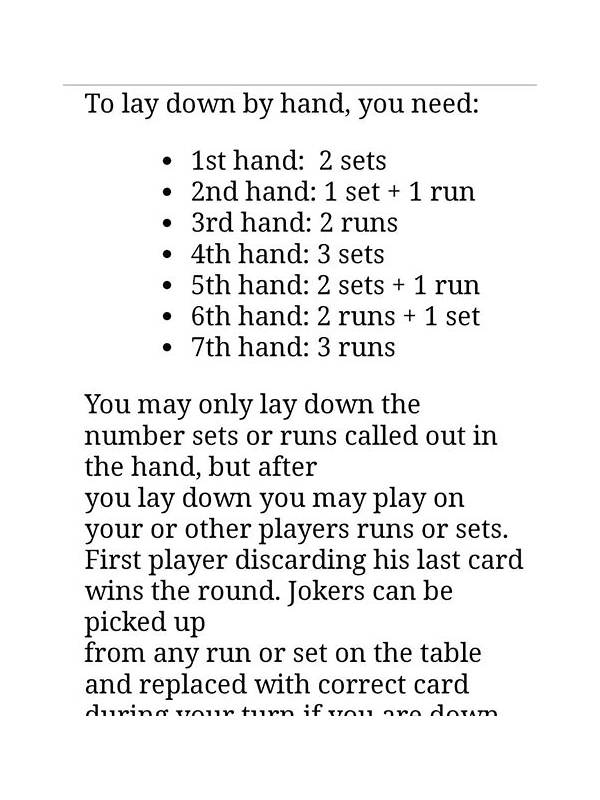
Be careful not to confuse patience with delay. Exploration is useful only while the extra options have real value. If the stock is shrinking or an opponent is close to declaring, shorten the window. Safety and legality outrank elegance. Before the endgame, verify that your chosen plan can satisfy the exact declaration rules in your game.
After the hand, record which stage changed your result. Did you commit too early, or did you preserve a weak fragment too long? A brief review turns the two-stage plan into a repeatable decision tool rather than a slogan.


