Rummy Tips: Use the Discard Pile as a Sequence of Questions

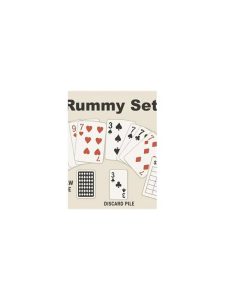
The discard pile can feel like a stream of information that is too large to process. You do not need to memorize every card to use it well. A better approach is to treat each visible discard as a question about the current hand and the likely plans at the table.
Begin with your own needs. When you see a card, ask whether it completes a sequence, strengthens a set, or merely keeps a possibility alive. If the card has no useful role in your hand, its importance may still come from what it tells you about available routes. The key is to separate personal value from table information.
Then ask whether the discard was likely unwanted or deliberately released. You cannot know an opponent’s thoughts with certainty, but timing gives a clue. A card discarded early may be routine. A connected card discarded after several turns may reflect a plan change or a defensive choice. Treat this as a hypothesis, not a fact. Avoid building a whole strategy on one uncertain inference.
The third question concerns danger. If several cards from one narrow area disappear, the chance of completing that route may be reduced. Count only the relevant cards you have actually seen; do not invent hidden information. This simple limit keeps your reasoning grounded. You can then compare a narrow route with a broader route that uses more available ranks.
Create a small mental watchlist of two or three cards. For example, you might watch a middle rank that completes your best sequence, plus a rank that would make your second group more flexible. When either appears, pause and compare the draw with the visible discard. A short list is easier to update than a complete memory of the pile.
Finally, close the loop by recording one question after the hand: which discard changed my plan? The answer may reveal that you missed an opportunity, or it may show that the card was less important than it felt at the time. This review builds observation without encouraging overconfidence. The pile provides evidence, but it never removes uncertainty.
Remember that the visible pile can also be misleading. A card may have been discarded because it was duplicated, because the player was changing plans, or because it was never useful to that player. Do not treat a single release as a signal to copy. Use the information to compare your own routes, and keep your decision tied to the cards you can actually verify.